
Bubble Witch 2 Saga
KingCasual
4.6171.36K Reviews
- Version
- 2.13.2.0
- Installs
- 100.00M
- Age Rating
- Everyone
Screenshots
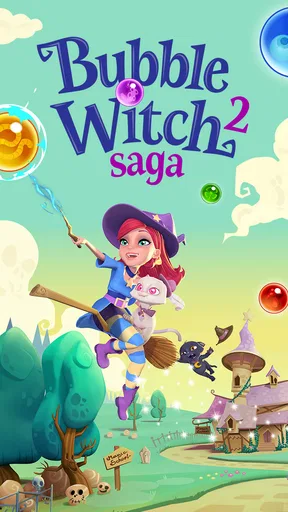
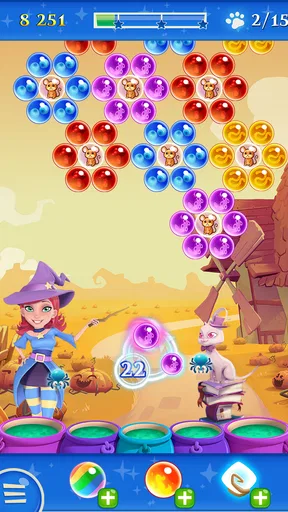
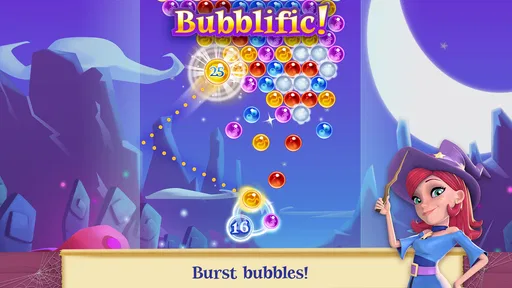
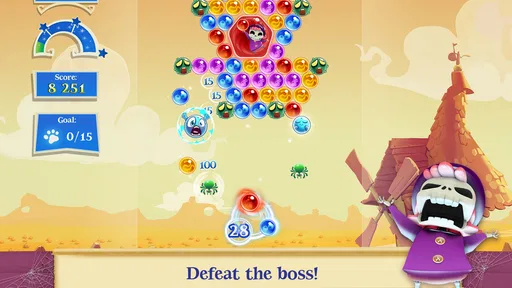
Our Review of Bubble Witch 2 Saga
 Analysis by Appyee
I tend to judge a casual puzzle game by what it feels like in the small spaces of a day: can I understand a level quickly, enjoy a few shots, and put it down without feeling that I have lost the thread? Bubble Witch 2 Saga suits that kind of play. Its bubble-matching rules are easy to pick up, while the changing layouts give me reasons to pause and plan rather than fire at random. It is a free casual game from King, rated for Everyone, and its long-running popularity makes it an especially familiar option in a crowded puzzle field.
How the pace feels from the first levels onward
When I first downloaded Bubble Witch 2 Saga, I wasn’t entirely sure what to expect. The game kicks off with an appealingly spooky intro that sets the mood perfectly. You’re immediately thrown into Stella the witch's world, where your goal is to help her defeat the dark spirits plaguing her land. Sounds thrilling, right?
The first thing that hit me was the vibrant graphics. The colors are rich and the animations smooth, making it a feast for the eyes. The game exudes a whimsical charm that’s hard to resist. And let’s talk about the sound effects — they’re delightfully quirky and add to the magical vibe.
The early rhythm is approachable: aim, shoot, and watch the colors connect. That makes it easy to start a level while waiting for a drink or taking a short break, without first learning a complicated control scheme. The speed of a session is less about frantic tapping than about deciding where a shot will do the most good. I find that distinction useful; the game can feel relaxed when a board is open, then demand more thought when a cluster blocks the route to an objective.
There is a trade-off to that simple loop. A level can look nearly solved and still take several careful shots, especially when obstacles interrupt the obvious line. If I am tired or only half paying attention, I am more likely to waste a move and feel the challenge as frustration rather than satisfying strategy. I get the best results when I treat each shot as a small decision, not as an invitation to rush through the board.
How to Play: Bubble-Popping Fun
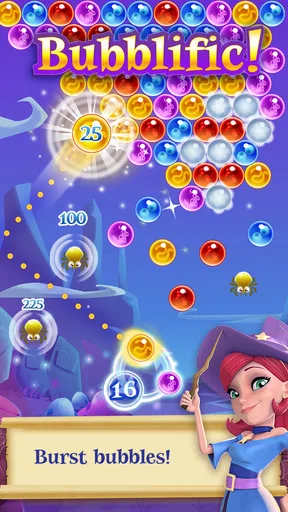
The gameplay is simple yet addictive. You have to match bubbles of the same color to clear them, aiming to complete each level’s specific objectives. The controls are intuitive; just aim and shoot. But don’t let the easy mechanics fool you — as you progress, the levels get trickier, demanding strategic thinking and quick reflexes.
There are special bubbles and boosters that you can use to gain an edge. Ever tried a fireball bubble? It’s super satisfying to watch it clear swathes of bubbles in one go. And the star bubbles? Using them strategically can be a game-changer.
A practical habit that helps is to look beyond the nearest match before taking a shot. I try to notice which connected group is supporting the bubbles I want to remove, then consider whether clearing a side cluster could open a more useful path. This makes limited shots feel more purposeful and reduces the temptation to spend a booster simply because a board looks messy. When a special bubble is available, I prefer to save it for a spot where its effect can change the shape of the puzzle, rather than use it on a small cleanup.
The game’s straightforward controls also make it a reasonable choice for someone who wants a puzzle without a long tutorial or a large time commitment. But it is not quite a no-thought distraction at every stage. Objectives can change the meaning of a good shot: clearing many bubbles is not automatically useful if the level asks for something more specific. I would recommend taking a moment to read the goal before you start firing, particularly when returning after a break.
Level Design: Challenging yet Fair
One of the aspects I love about this game is the level design. Each stage is unique and offers a new challenge. Some levels require you to free ghost animals, while others have you aiming to reach the top of the screen. It keeps things fresh and exciting.
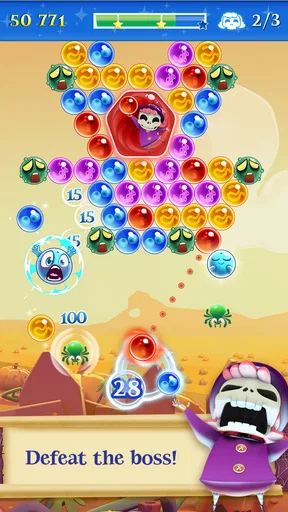
As you advance, you’ll encounter all sorts of obstacles like black bubbles and spiders that add an extra layer of difficulty. At times, it can feel like the game is testing your patience, but that’s part of the fun. It’s a delicate balance between challenge and reward.
Those different objectives are what keep the familiar matching action from becoming entirely automatic. When I need to free something or reach a particular part of the board, I have to think about direction and access, not just color. The useful question is often “what must be cleared to make the next shot possible?” rather than “which group is largest?” That small change in approach can prevent a string of moves that looks productive but does little for the actual goal.
There are moments when a difficult layout can make progress feel slow, and that is where patience matters most. I find it better to pause between shots than to repeat the same angle in hope of a lucky result. If a level is becoming irritating, stepping away and returning with fresh eyes is more appealing than turning every attempt into a test of endurance. The game works best for people who enjoy gradually working out a puzzle, not for anyone who expects every stage to be cleared immediately.
What a short session looks like in real life
For an everyday example, I can imagine opening the game during a commute break or while waiting for someone at a café. One level gives that spare moment a clear beginning and end: check the objective, scan the bubble arrangement, make a few deliberate shots, and stop when the interruption is over. The visual feedback makes even a short attempt feel like play rather than setup, and I do not need to remember a complicated sequence of controls when I return later.
That convenience depends on choosing the right moment. If I have only a minute and know I will be interrupted, I avoid starting a level that already looks awkward or demands several careful decisions. A quick puzzle is still a puzzle; being interrupted just as I am lining up an important shot can break the flow. For a longer, more focused break, the changing objectives and obstacles give me more to think about than a simple matching game where every move is interchangeable.
Compared with the usual alternatives in casual puzzle games, this one leans on aiming and spatial planning rather than swapping pieces on a grid. That makes it a better fit for someone who enjoys judging angles and setting up a clear path. If I want something that can be played almost entirely by instinct, a very simple match-and-clear game may be a better choice. If I want a slower, more elaborate puzzle with long planning chains, a dedicated strategy puzzler may suit me more. This sits between those extremes: easy to enter, but not always effortless to solve.
Performance, stability, and device expectations
My impression of the presentation is that the action is easy to follow: the bright bubbles stand apart from the darker obstacles, and the animations give each shot a clear result. That visual clarity matters more to me than flashy effects in a game built around aiming. I would not choose it for demanding, high-intensity action, but its casual format makes it suitable for short play sessions when I want to focus on a board rather than master complex controls.
It is available on Android devices running version 6.0 or later, and the current version is 2.8.2.0. Those details help set expectations, but they do not mean that every older or lower-powered device will feel identical. If a phone is already sluggish, crowded with other running tasks, or low on free space, I would close unnecessary apps and check that the game has room to run before blaming a particular level or shot. I would also avoid assuming that a visual pause means a move has registered; waiting for the board to settle is safer than tapping repeatedly.
For reliability, the useful question is how easily I can resume after an interruption. The level-based format is naturally suited to stopping between stages, so I try to finish a board before switching away when possible. If a call or message pulls me out mid-level, I give the game a moment to respond when I return and check the board state before making another move. I would not make promises about recovery in every circumstance, but this cautious habit avoids accidental shots and makes brief sessions less stressful.
Battery and data use can vary by device and how someone plays, so I would not treat a casual game as automatically cost-free in every practical sense. If I am trying to conserve battery, I keep sessions short and lower the screen brightness to a comfortable level. If connectivity or interrupted access matters to me, I would test the game in my usual situation before relying on it as an offline pastime; I would not assume every feature behaves the same without a connection.
Social Features: Connect and Compete
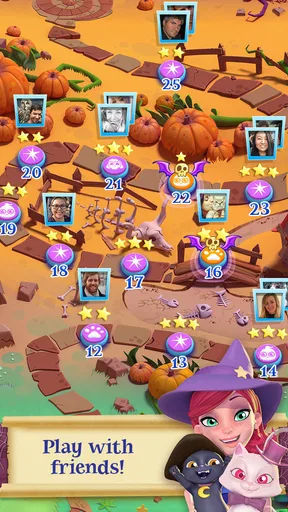
What’s a game without a little friendly competition? Bubble Witch 2 Saga allows you to connect with friends, compare scores, and even send each other lives. It’s a great way to engage and maybe even boast about your bubble-popping prowess.
The leaderboard feature is particularly motivating. Nothing like seeing your friend’s score to push you to try ‘just one more round.’
That social layer is most appealing if a few people you know already play. Comparing progress can give a familiar puzzle a light competitive edge, but I would not make the game’s appeal depend on having an active group of friends. If I prefer solo play, the objectives and obstacles still provide the main reason to continue. And if I do connect with others, I would treat the leaderboard as a bit of friendly context rather than a reason to spend money or turn every session into a race.
Free to start, with spending best kept deliberate
Now, let’s address the elephant in the room: in-game purchases. Like many free-to-play games, Bubble Witch 2 Saga offers various in-app purchases. These can help you get through particularly tough levels or acquire boosters. However, I found it entirely possible to enjoy the game without spending a dime. Patience is key, and there’s something rewarding about earning those boosters through gameplay.
But hey, if you’re in a hurry or want to support the developers, the option is there.
The purchase range runs from $0.99 to $159.99 per item, so I would be especially careful about tapping through any payment prompt when I only meant to keep playing. The free entry point is useful, but it is worth deciding in advance whether I am comfortable paying for convenience. For me, the best approach is to treat a tough level as a puzzle to revisit, not as an automatic reason to buy help. Someone who dislikes optional purchases appearing in a free game may find that setup irritating, even if they never spend.
King has kept this casual game familiar to a large audience: it has passed 100 million installs, with a 4.6 average from around 3 million ratings and roughly 173,000 written reviews. It was released on June 3, 2014, and that history helps explain why it feels like an established entry in the bubble-popping style rather than a new experiment. I would read popularity as a sign that many people enjoy the basic loop, not as proof that every player will like its pacing or purchase options.
Final Thoughts: Enchantment Awaits
In conclusion, Bubble Witch 2 Saga is a delightful blend of strategy and fun. Its charming graphics, engaging gameplay, and challenging levels make it a must-try for casual gamers and seasoned players alike. It’s one of those games that you can pick up for a quick session or lose yourself in for hours.
If you’re a fan of puzzle games with a magical twist, this one’s definitely worth a download. Trust me, you’ll be popping those bubbles and casting spells in no time.
Ready to join Stella on her enchanting adventure? Go ahead and dive into the whimsical world of Bubble Witch 2 Saga — who knows, you might just find it bewitching.
My performance verdict is measured rather than absolute: the game’s simple aiming and clear board objectives make it feel approachable, while difficult layouts can slow a session and reward patience. I would choose it for short, thoughtful breaks, especially if I enjoy planning shots and clearing specific targets. I would skip it if I want uninterrupted action, dislike retrying a puzzle, or prefer a game with no optional spending. For the right player, it is an easy one to try; the best way to enjoy it is to take levels at your own pace and keep purchases a choice, not a shortcut I feel pressured to take.
Verdict
Strengths of Bubble Witch 2 Saga
- Engaging puzzles with increasing difficulty.
- Stunning graphics and vibrant animations.
- Regular updates with new levels.
- Accessible offline gameplay mode.
- Free to play with optional in-app purchases.
Limitations of Bubble Witch 2 Saga
- Lives refill slowly without purchases.
- Some levels feel overly repetitive.
- In-app purchases can get pricey.
- Advertisements can interrupt gameplay.
- Requires a stable internet for events.
Other Releases by King
View All
Candy Crush Saga
Casual4.6

Candy Crush Soda Saga
Casual4.6

Candy Crush Jelly Saga
Puzzle4.6

Bubble Witch 3 Saga
Puzzle4.7
Similar Picks in This Category
View All
My Talking Angela
Outfit7 Limited4.2

My Talking Tom
Outfit7 Limited4.3

Pou
Zakeh4.2

My Talking Tom 2: Pet Game
Outfit7 Limited4.3
Candy Crush Saga
King4.6

Bridge Race
Supersonic Studios LTD4.1
Frequently Asked Questions
What is the objective of Bubble Witch 2 Saga?
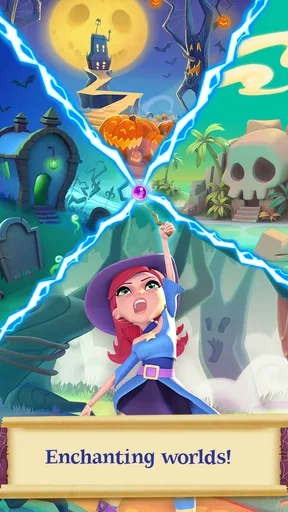
Bubble Witch 2 Saga is a puzzle game where players aim to clear levels by shooting bubbles to match three or more of the same color. The goal is to help Stella and her cats defeat dark spirits by completing levels with strategic bubble popping, progressing through various magical worlds.
Is Bubble Witch 2 Saga free to play?
Yes, Bubble Witch 2 Saga is free to download and play. However, it offers in-app purchases for items such as extra lives or special boosters. These purchases are optional, and players can enjoy the game without spending money, although purchases can enhance the gaming experience.
What platforms is Bubble Witch 2 Saga available on?
Bubble Witch 2 Saga is available on both Android and iOS platforms. Players can download it from the Google Play Store for Android devices or the Apple App Store for iOS devices. The game requires a stable internet connection to access certain features and updates.
How does the game handle player progress and saving?
Player progress in Bubble Witch 2 Saga is saved automatically through a connection with Facebook or King’s account service. By linking to these accounts, players can synchronize their progress across multiple devices, ensuring they can continue their adventure without losing any progress.
Are there social features in Bubble Witch 2 Saga?
Yes, Bubble Witch 2 Saga offers several social features. Players can connect the game to their Facebook accounts to compete with friends, see their progress on leaderboards, and send or receive lives and gifts. This connectivity enhances the game's community aspect and competitive edge.
Play our best games!


